
 Business Plans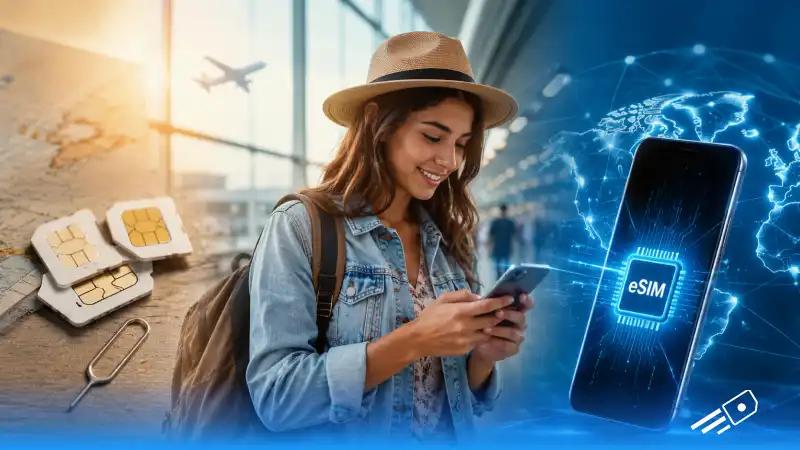
Travel is exciting, but getting connected abroad can be a headache. Many travellers land and instinctively look for a travel SIM card at the airport, only to pay hefty prices for a short-term data plan. In reality, airport SIM cards often come with inflated costs, limited data, and long queues. There are smarter ways to stay online on holiday, as thousands of globetrotters have discovered (and prefer eSIMs).
In this guide, we’ll explain why airport SIM cards can be a trap, introduce you to eSIMs (the modern digital SIM), compare both options side by side, and show you the easiest ways to get online on your next trip.
Airport SIM Card Pitfalls
Picking up a SIM card in airport shops seems like an obvious first step after touchdown. But beware, airport SIM card vendors know that you’re desperate for data the moment you land. They often charge premium prices. These “tourist SIM card” bundles may look convenient, but they usually include a fixed short-term data allowance that might not fit your schedule. You could end up paying for a week’s data while staying only a few days, or vice versa.
Beyond price, airport SIM stalls come with other hassles. Long queues and paperwork can eat up precious time. Staff can struggle with language, leading to setup glitches. And once you finally insert a tiny plastic SIM, there’s a real risk of losing it or misplacing your original SIM. So if not a SIM card, then how to have internet abroad? Many people wonder that, and the answer is eSIM.
7 Reasons to Skip Airport SIM Cards
There are some reasons which allow you to buy a SIM Card before travelling rather than from the Airport:
- Overpriced Plans: Airport SIM stalls often add a hefty “tourist tax”. You might pay airport SIM card prices that are 30–50% higher than in-city rates.
- Limited Duration Packages: Out-of-the-box tourist SIM card bundles (7-day, 10-day, etc.) can force you to buy more data than needed, or leave you short on a longer trip.
- Long lines: Delays are expected when you wait for a SIM. Agents are required to manually check passports and activate cards, and peak arrivals can result in queues.
- Unnecessary extras: Many airport plans come with bundles of voice minutes or text messages you’ll never use. You're paying for services that are useless to a tourist
- Language and installation headaches: Everyone makes mistakes (including those who help you). Incorrect APN settings or other activation errors can result in you being offline, and can be difficult to resolve once you leave the counter.
- Risk of Losing Your SIM: Removing your home SIM to insert the new one can backfire. If you lose that tiny card, you might be locked out of banking apps or essential services back home.
- Better Alternatives Exist: Why queue when you can plan? Today’s travellers can download a SIM card for international travel before they leave; see eSIM options below. Going digital skips all the airport drama.
Each of these points adds friction or cost. In practice, buying a SIM on arrival is convenient once, but it often costs you more in cash, time, and peace of mind than it’s worth.
Meet the eSIM Card
An eSIM (embedded SIM) is a built‑in, digital SIM in your phone. Instead of popping in a physical card, you scan a QR code or download a profile to activate mobile data. There are many advantages of converting to eSIM that you should know. Here’s what makes eSIMs special:
- Digital SIM Profile: With an eSIM card, there’s no chip to insert or lose. Your data plan is downloaded straight to your phone’s eSIM (a small embedded chip).
- Instant Activation: Bought a plan before travel? You can install it via app or QR code and have it connect as soon as you land, no kiosks needed.
- Multiple Profiles: Your phone can hold several eSIM profiles at once. Load one plan for Europe, another for Asia, and switch instantly when you cross a border.
- No Roaming Needed: eSIMs let you connect through local carriers abroad. That means you avoid high international roaming fees on your home plan.
In short, an eSIM card for international travel lets you go online on day one of your trip without standing in a shop. It’s already built into your device and just needs provisioning.
SIM Card vs eSIM: Which One Stands Out
There is a great difference between eSIM and a SIM card:
| Feature | Physical SIM Card | eSIM Card |
| How to get it | Buy at airport/shops or order a local SIM (often as airport SIM cards with tourist pricing). Activation by inserting the card and registering. | Buy online before travel (via app or website). Activate by scanning a QR code or downloading a profile. |
| Cost | Subject to tourist premiums and roaming fees. Tourist SIM cards at airports are expensive. | Generally cheaper. eSIM data plans avoid roaming markups and surprise fees. |
| Flexibility | One plan per country. Must switch to a new SIM when crossing borders. | One eSIM can hold many plans. Switch networks with taps, no swapping physical cards. |
| Setup & Use | Manual setup: insert SIM, possible PIN or APN entry. | Quick setup: scan QR or click link in minutes. Most plans auto-install settings. |
| Portability | Physical card can be lost or damaged. Must store safely when not in use. | No physical card to lose. Profile stays on your device. |
| Coverage | Local network coverage (needs a new SIM in each country unless roaming). Often an international SIM card covers limited areas. | Global or regional plans available. A single international eSIM can cover multiple countries or even continents. |
Advantages of an eSIM for International Travellers
Switching to an eSIM unlocks many benefits, especially for globetrotters:
- Hassle-Free Travel: Download a new eSIM plan for each country (or a global plan) and stay online across borders. No more juggling physical cards as you cross borders.
- Lower Costs: eSIM data plans beat international roaming SIM rates from home carriers. You pick local rates, so you won’t get slammed with surprise roaming fees.
- Save Time: Instant activation means you’re connected on arrival. Saves you from the long airport lines, which are time-consuming and draining.
- Secure & Eco-friendly: No tiny SIM card to lose or break. Plus, eSIMs eliminate plastic waste from single-use SIMs. They’re better for the planet (no shipping or plastic involved).
- Flexibility: Easily switch between carriers or plans with a few taps. Find the best data package for your trip length and data needs; top-ups are quick via app.
In short, an eSIM for international travel means peace of mind. You arrive, you’re online; as one traveller put it, “airport SIM cards feel like such a waste of time and money” once you’ve tried eSIM.
How to Buy a Travel eSIM Before Your Trip
Planning is the key to seamless travel data. Here’s how to get a travel eSIM easily:
- Choose a Reliable Provider: Research eSIM plans online. Use trusted sites or apps (like eSIM Cards) that offer clear country or regional data options.
- Compare Plans: Look for the right data allowance and validity. Ignore cheap copycats – make sure the plan meets your needs for your trip length.
- Buy eSIM: Skip the airport entirely; Buy eSIM Online before you go. Once purchased, you’ll get a QR code or activation link by email or in the app.
- Install Before You Travel: Scan the QR or follow the app’s instructions to install the profile. Test it if possible (aeroplane mode on) so you land knowing it works.
By planning, you’ll avoid the how to get a SIM card scramble on arrival. Instead, your phone will have full connectivity waiting for you at 30,000 feet.
Travel Smarter with eSIM Cards
When it’s time to finalise your trip, remember that at eSIM Cards we make this simple. Our goal is to take the worry out of travel connectivity. Many travellers already prefer us for straightforward global data plans, 24/7 support, and reliable coverage. No matter whether you want an eSIM UK or a global plan, give eSIM Cards a try and see how seamless your next trip can be.
Stay Connected, Travel Better
No matter where you’re headed, the smartest move is to organise your data before you land. Buying a travel SIM card at the airport might seem easy, but it often means overpaying and missing out on better options. By choosing an eSIM, you get more flexibility, better value, and instant connectivity on day one.
In the end, your travel memories should be about adventures, not hunting for Wi-Fi. Plan with an eSIM or a trusted pre-booked SIM plan, and focus on what really matters: enjoying the journey, stress-free.
FAQs
Q1. How do I get a SIM card when travelling internationally?
Ans. Buying at your destination is one option, but preordering a digital eSIM is easier. Just purchase a travel eSIM online and activate it via QR code once you arrive. This way you have data as soon as you land.
Q2. Are airport SIM cards worth it?
Ans. Usually not. Airport SIMs are convenient but expensive and inflexible. They often include unused extras and force long queues. Planning (with eSIM or a local SIM shop) saves money and time.
Q3. What is an eSIM?
Ans. An eSIM is an embedded SIM profile on your phone. You install a travel data plan via a download or QR code instead of inserting a physical card. It works just like a normal SIM, letting you connect to local networks instantly.
Q4. Can I use my home roaming SIM or should I get an eSIM?
Ans. International roaming SIM plans typically charge high fees. It’s usually cheaper to get a local or eSIM plan. eSIMs let you avoid roaming charges by giving you local rates overseas.
Q5. How do I have internet abroad with my phone?
Ans. The easiest way is a travel eSIM or local SIM. With an eSIM card, you’ll have a ready data plan when you land, no special settings needed. Alternatively, a local SIM or global SIM card can work, but an eSIM is faster and more convenient.